“Is my water safe?” is a question about specific contaminants, not a single number. This guide explains how India's drinking-water standard is organised and which parameters matter most for health.
What makes drinking water safe?
Safe drinking water, as WHO defines it, does not represent any significant risk to health over a lifetime of consumption. In practice that means no pathogens and chemical contaminants below health-based limits. India's limits are set by the Bureau of Indian Standards in IS 10500:2012.[1][2]
- Acceptable limit
- The IS 10500 value that water should meet.
- Permissible limit (in the absence of an alternate source)
- A relaxed upper value allowed only when no better source is available. Toxic substances such as arsenic, lead and nitrate have no relaxation.
- Indicator organism
- E. coli or thermotolerant coliforms. Their presence signals faecal contamination and the likely presence of pathogens.
Why is microbial safety the top priority?
Because microbial contamination causes acute illness, including diarrhoea, cholera, typhoid and hepatitis A, often after a single exposure. WHO states that microbial risks are the most common and widespread health risk associated with drinking water.[1]
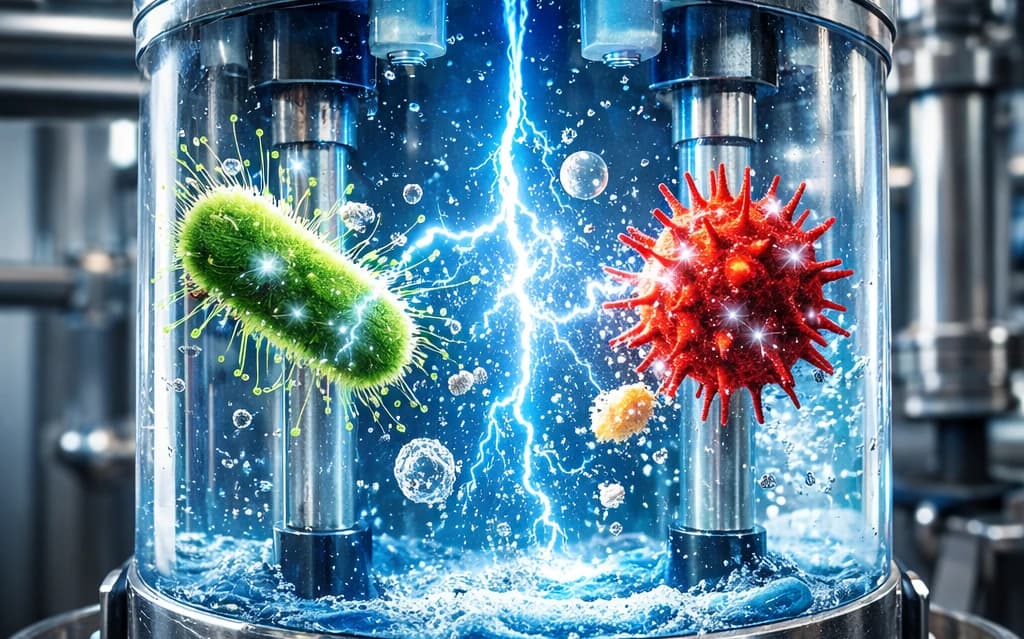
IS 10500 requires that E. coli and total coliform bacteria shall not be detectable in any 100 mL sample. Disinfection (chlorine, UV, boiling) and membrane barriers (UF, RO) are the tools to achieve this. Our UV Water Disinfection guide explains one of them in depth.[2]
Which chemical contaminants matter most?
The chemical contaminants with the greatest health impact in India are fluoride and arsenic, which occur naturally in groundwater, along with nitrate from fertilisers and sewage. Iron, lead and other metals, plus pesticides, matter locally.[1][3]
| Parameter | Acceptable limit | Permissible limit* | Why it matters |
|---|---|---|---|
| E. coli / total coliform | Not detectable in 100 mL | No relaxation | Faecal contamination; acute illness |
| Fluoride | 1.0 mg/L | 1.5 mg/L | Dental and skeletal fluorosis at high long-term intake |
| Arsenic | 0.01 mg/L | No relaxation | Skin lesions and cancer risk with long-term exposure |
| Nitrate (as NO₃) | 45 mg/L | No relaxation | Risk to bottle-fed infants (methaemoglobinaemia) |
| Lead | 0.01 mg/L | No relaxation | Neurotoxic, especially to children |
| Copper | 0.05 mg/L | 1.5 mg/L | Gastrointestinal effects at high levels |
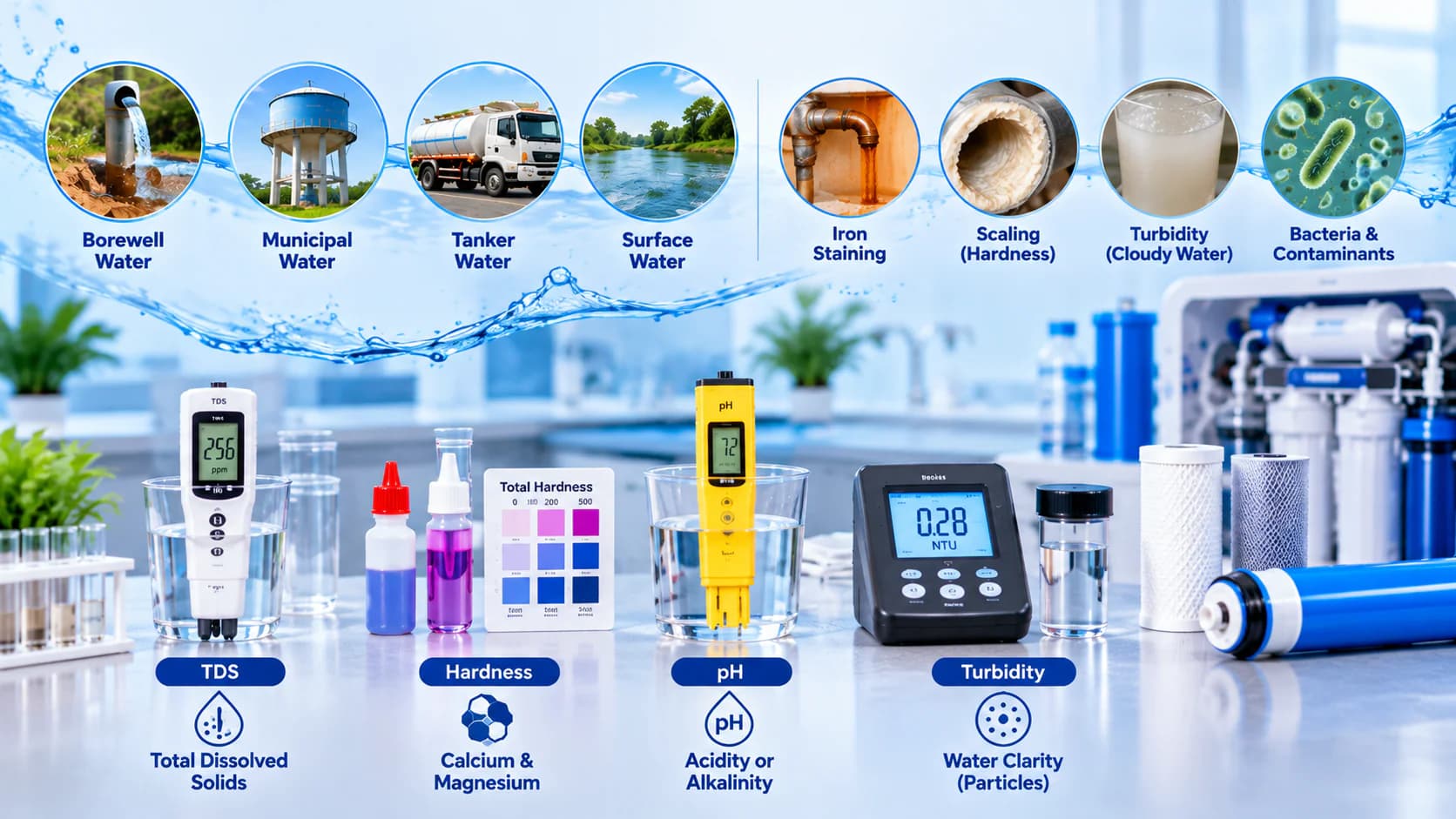
What do TDS, pH and hardness tell you about safety?
They mainly indicate taste, corrosion and scaling, not direct toxicity. WHO sets no health-based guideline for TDS, pH or hardness. They remain useful screening signals: an unusual reading is a reason to test further.[1][4]
Acceptability parameters in IS 10500:2012[2]
| Parameter | Acceptable | Permissible* | What it affects |
|---|---|---|---|
| pH | 6.5–8.5 | No relaxation | Corrosion (low pH), scaling and taste (high pH), disinfection efficiency |
| TDS | 500 mg/L | 2,000 mg/L | Taste, scaling, need for RO |
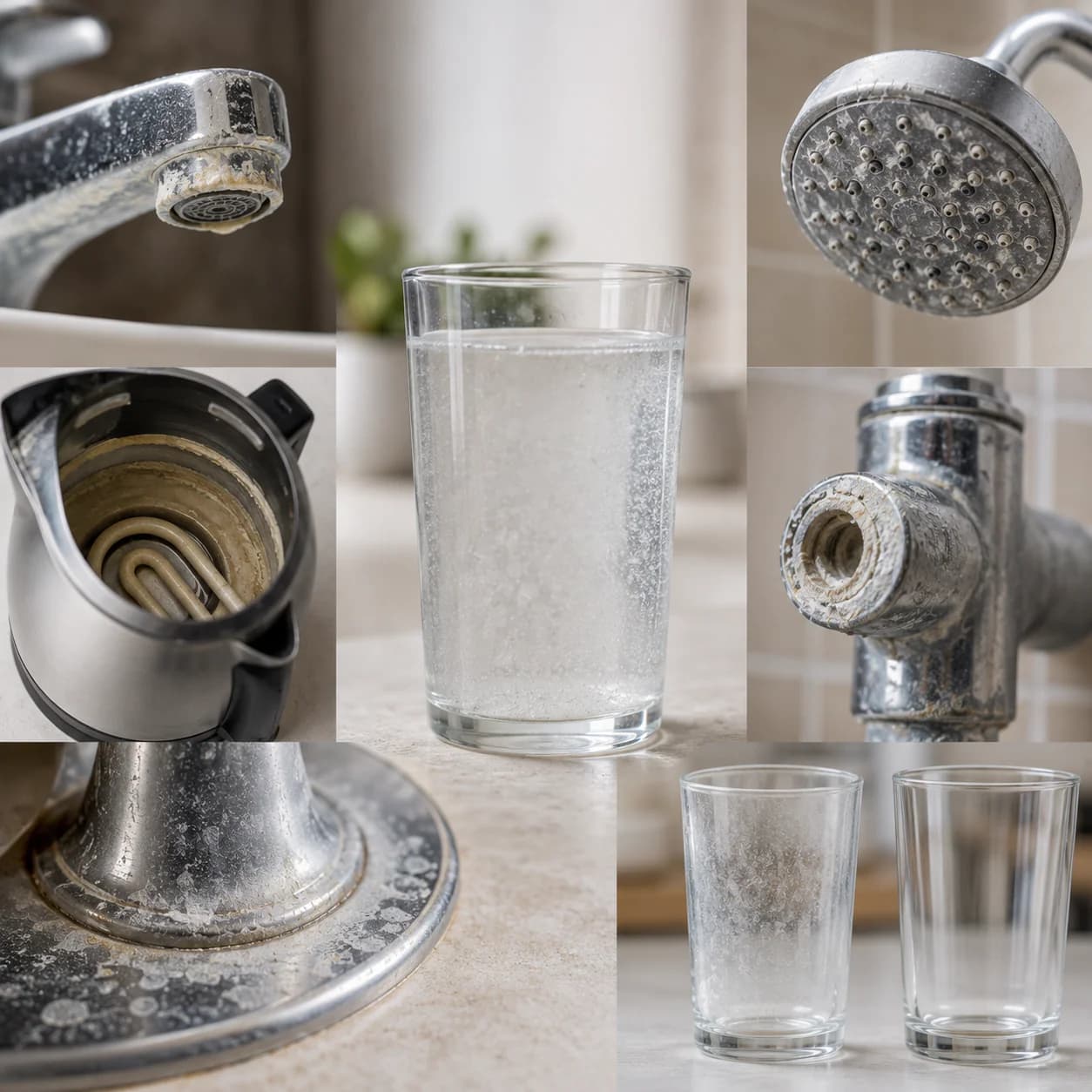
| Total hardness (as CaCO₃) | 200 mg/L | 600 mg/L | Scale, soap use, appliance life |
| Turbidity | 1 NTU | 5 NTU | Appearance; shields microbes from disinfection |
| Chloride | 250 mg/L | 1,000 mg/L | Salty taste, corrosion |
| Sulphate | 200 mg/L | 400 mg/L | Taste; laxative effect at high levels |
- Read more: What Does TDS Mean in Drinking Water?
- Read more: What Is pH in Drinking Water?
- Read more: Hard Water in India
Can treated water become unsafe again?
Yes. Water that leaves a treatment plant safely can be recontaminated through leaking pipes, intermittent supply that draws in groundwater, and dirty overhead or sump tanks. That is why point-of-use treatment and regular tank cleaning matter, and why testing should be done at the tap.[1]
- Clean overhead and sump tanks at least every six months.
- Keep tank lids sealed and vents screened.
- Store treated water in clean, covered containers and use a tap or ladle rather than dipping cups.
- Replace purifier filters, membranes and UV lamps on schedule.
How can you tell if your water is safe?
You cannot tell by look, smell or taste alone. Clear water can carry bacteria or arsenic. A laboratory test covering bacteria and the chemical parameters relevant to your area is the only reliable way. See our Water Quality Testing guide.[5]