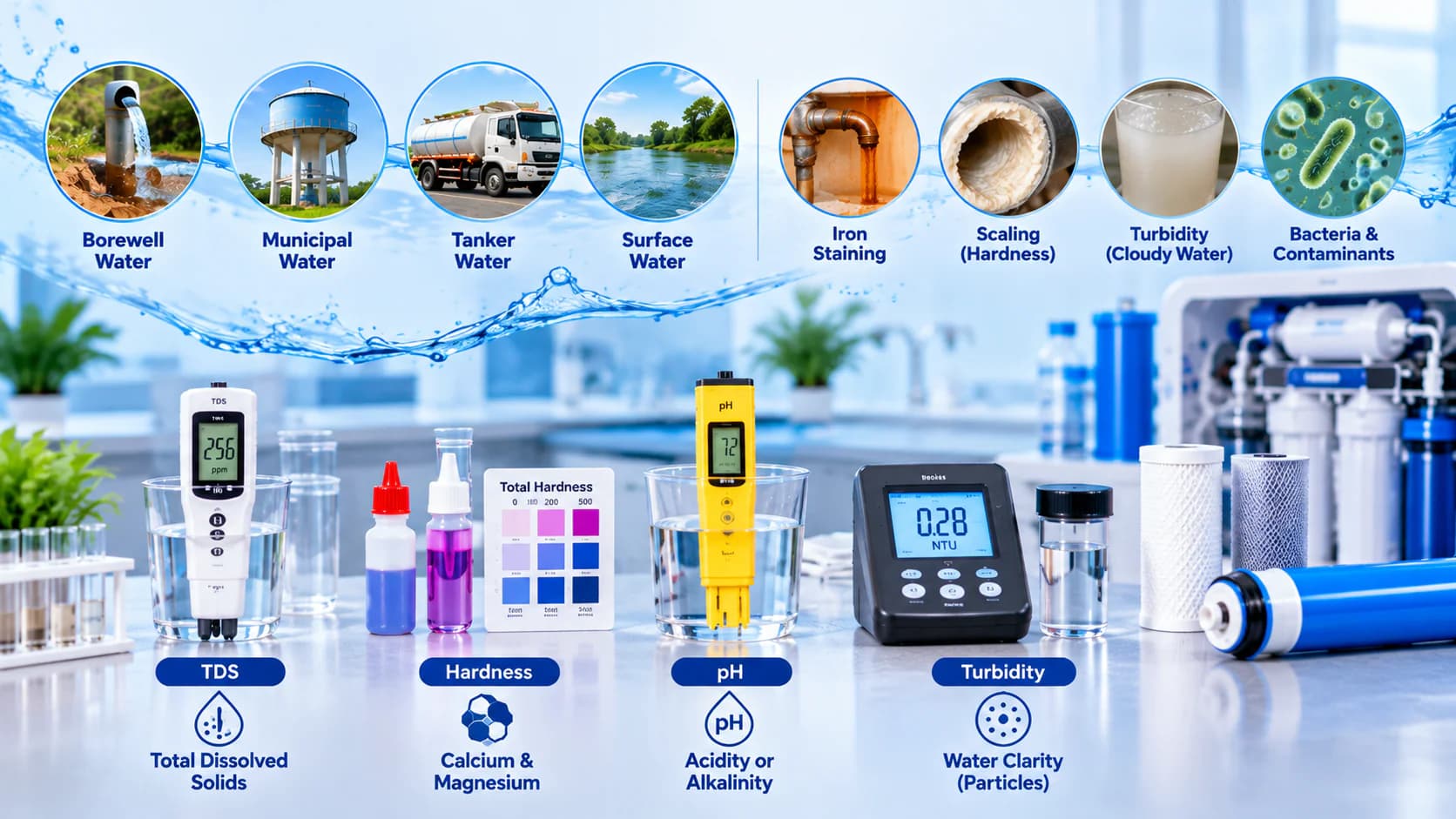
pH is one of the most quoted numbers in drinking water, and one of the most misunderstood. This guide explains what it actually measures, why it matters, and how to read a pH number on a purifier brochure or test report.
What is pH?
pH is a measure of hydrogen-ion activity in water, written as pH = −log₁₀(a_H⁺). Pure water at 25 °C has a pH of 7, where hydrogen ions (H⁺) and hydroxide ions (OH⁻) are balanced. Below 7, H⁺ dominates (acidic); above 7, OH⁻ dominates (alkaline).[1][2]
- Acidic
- pH below 7. More hydrogen ions than hydroxide ions.
- Neutral
- pH 7 at 25 °C. The neutral point shifts slightly with temperature (about 6.8 at 40 °C).
- Alkaline (basic)
- pH above 7. More hydroxide ions than hydrogen ions.
- Alkalinity
- The capacity to neutralise acid (buffering), mostly from bicarbonate. It is related to pH but is a different measurement.
How does the pH scale work?
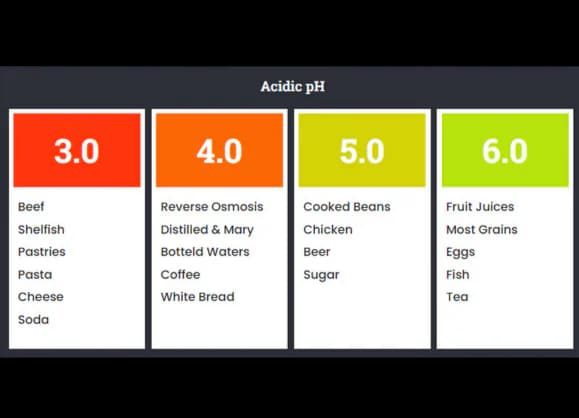
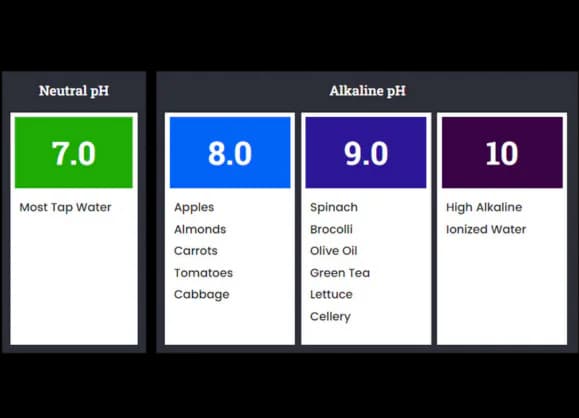
The pH scale runs from 0 (strongly acidic) to 14 (strongly alkaline) and is logarithmic: each whole number is a tenfold change in hydrogen-ion activity. Water at pH 6 is ten times more acidic than water at pH 7, and pH 5 is a hundred times more acidic.[1]
| pH | Example | Category |
|---|---|---|
| About 2 | Lemon juice | Strongly acidic |
| About 3 | Vinegar, many soft drinks | Acidic |
| About 5 | Black coffee | Mildly acidic |
| About 5.6 | Clean rain (dissolved CO₂) | Mildly acidic |
| About 6.5–6.8 | Milk | Slightly acidic |
| 7 | Pure water at 25 °C | Neutral |
| 6.5–8.5 | Drinking water (IS 10500 range) | Near neutral |
| About 8.1 | Seawater | Slightly alkaline |
| About 8.3–9 | Baking soda solution | Alkaline |
| About 12.5–13 | Household bleach | Strongly alkaline |
What is the safe pH range for drinking water?
In India, IS 10500:2012 sets the acceptable pH range for drinking water at 6.5 to 8.5, with no relaxation. The WHO has not set a health-based guideline value for pH. Its importance is mainly operational: controlling corrosion and making disinfection work.[3][4]
| pH | Practical effect |
|---|---|
| Below 6.5 | More corrosive: can leach lead, copper and iron from pipes and fittings; metallic or sour taste; blue-green or rust stains |
| 6.5–8.5 | Acceptable for drinking under IS 10500 |
| Above 8.5 | Scale formation, slippery or bitter taste; chlorine becomes a less effective disinfectant (less hypochlorous acid) |
Does the pH of drinking water affect health?
Not directly, within the normal range. The stomach is strongly acidic and the body regulates blood pH tightly (about 7.35–7.45), so the pH of the water you drink does not shift it. pH mainly matters indirectly, through metals leached from pipes by acidic water.[4][7]
How do you measure the pH of water at home?
| Method | Accuracy | Notes |
|---|---|---|
| pH test strips | About ±0.5–1 unit | Cheap; hard to read in low-mineral water |
| Indicator drops | About ±0.5 unit | Colour comparison; good for rough checks |
| Digital pH meter | About ±0.1 unit when calibrated | Calibrate with buffer solutions; store the probe wet |
| Laboratory test | Most accurate | Done to IS 3025 / Standard Methods procedures |
- Calibrate the meter with at least two buffers (for example pH 7 and pH 10) before testing alkaline water.
- Measure soon after collection. Water absorbs CO₂ from the air and pH drifts.
- Low-TDS water (such as RO output) gives slow, unstable readings, so wait for the value to settle.
- Note the temperature. Good meters compensate automatically.[2]