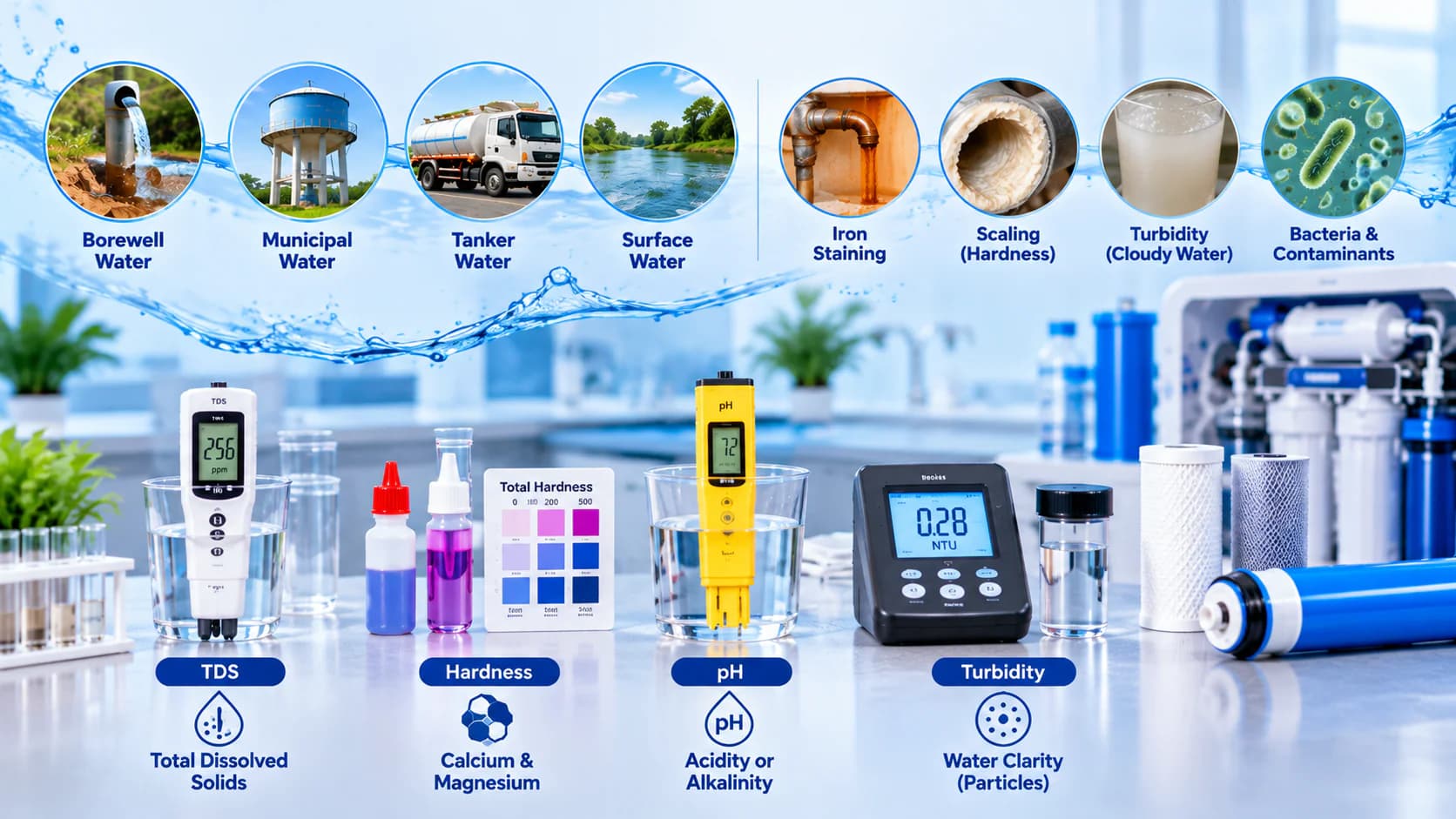
India draws a large share of its drinking water from groundwater, and groundwater chemistry depends on local geology. Government monitoring by the Central Ground Water Board (CGWB) regularly reports fluoride, nitrate, salinity, arsenic and iron above BIS limits in parts of many states. On top of that, surface supplies face microbial and pollution risks.
What are the most common water quality problems in India?
Seven issues account for most cases: microbial contamination, high TDS and salinity, hardness, fluoride, arsenic, nitrate and iron. Which ones affect you depends mainly on whether your water comes from a treated municipal supply or from groundwater, and where you live.[1][2]
| Problem | Typical source / regions | Signs you may notice | Treatment that addresses it |
|---|---|---|---|
| Bacteria & viruses | Leaking pipes, intermittent supply, open or dirty tanks; everywhere | Often none; sometimes odour, turbidity or illness in the household | Disinfection (UV, chlorine, boiling) or UF/RO; fix the source |
| High TDS / salinity | Groundwater in arid and coastal areas (e.g. parts of Rajasthan, Gujarat, Haryana) | Salty or brackish taste; white residue | RO |
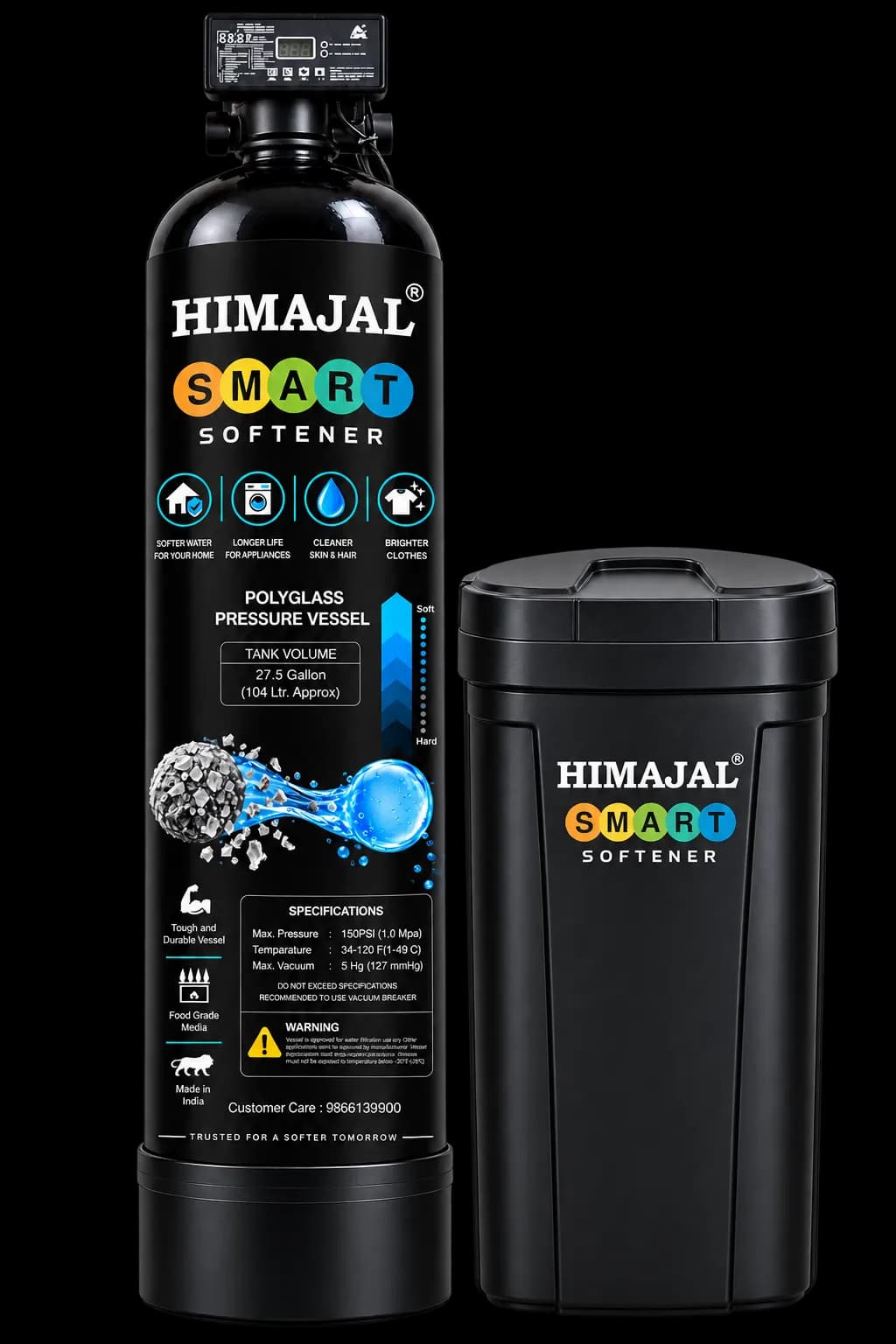
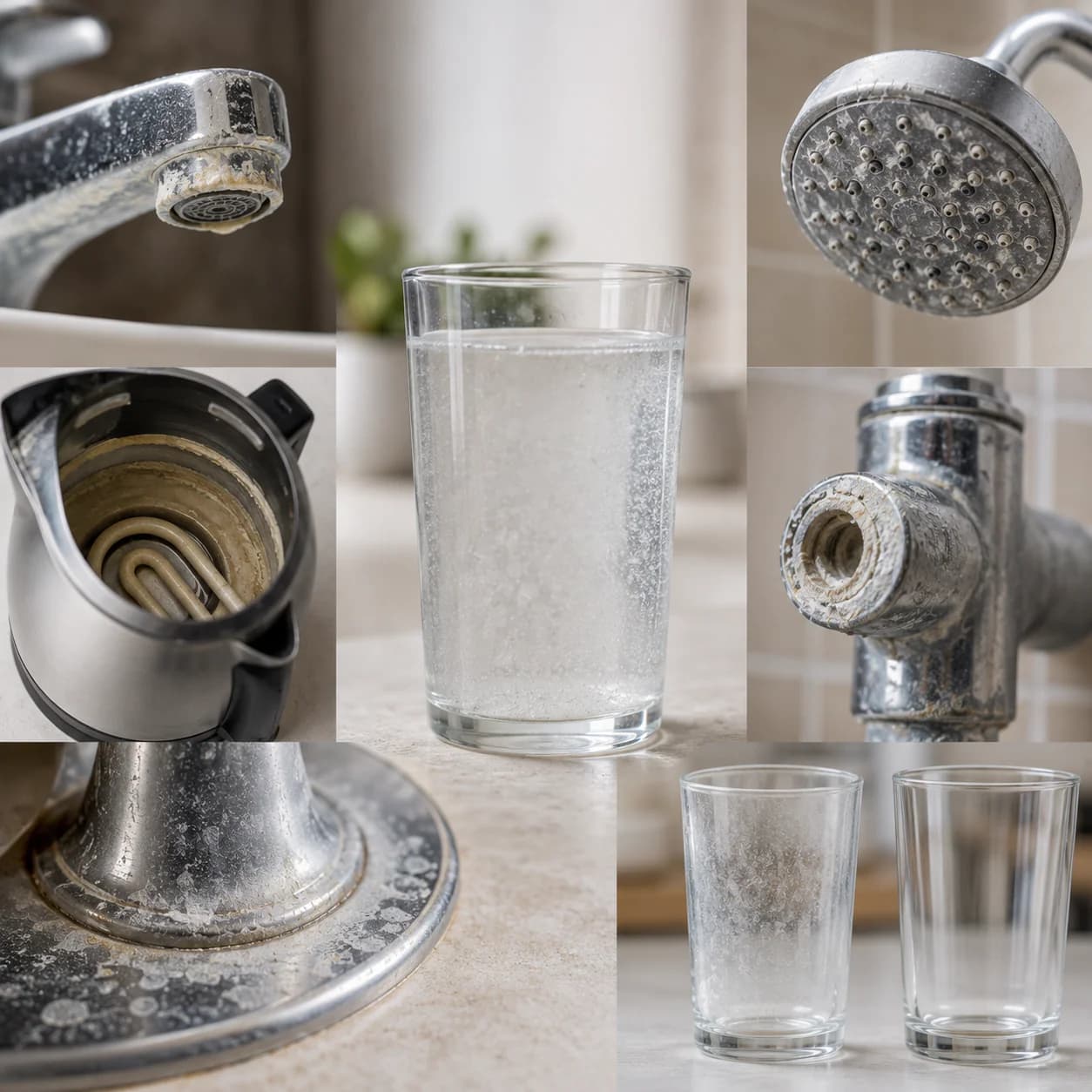
| Hardness | Groundwater over limestone and hard-rock aquifers, widespread in the Deccan | White scale on taps and kettles; poor lather | Softener or conditioner (whole home); RO (drinking) |
| Fluoride | Groundwater in parts of Rajasthan, Telangana, Andhra Pradesh, Karnataka, Gujarat and other states | None in water; mottled teeth in the community over time | RO or specialised defluoridation |
| Arsenic | Groundwater in the Ganga–Brahmaputra plains (e.g. West Bengal, Bihar, Uttar Pradesh, Assam) | None in water; skin lesions after long exposure | RO or arsenic-specific media; verified by testing |
| Nitrate | Agricultural areas and near sewage or septic tanks; many states | None | RO; protect the well from contamination |
| Iron | Groundwater in many regions, including the North-East, Odisha and coastal belts | Yellow-brown colour, metallic taste, rust stains on buckets and tiles | Oxidation + iron-removal filter, then purifier |
Why is microbial contamination so common?
Because water can become contaminated after treatment. Intermittent supply lets pipes depressurise and draw in polluted water through leaks, and household storage tanks and containers can introduce bacteria. WHO identifies faecal contamination as the dominant drinking-water health risk worldwide.[4]
How do you know if your water has excess fluoride?
You cannot see, smell or taste fluoride. Long-term exposure above about 1.5 mg/L can cause dental fluorosis, which shows as chalky white or brown mottling of children's teeth, and at higher levels skeletal fluorosis. A laboratory test is the only way to know your level.[3][4][5]
India runs a National Programme for Prevention and Control of Fluorosis in endemic districts. Boiling does not remove fluoride. RO and activated-alumina defluoridation do.[3][6]
What are the signs of iron in borewell water?
Water that comes out clear but turns yellow or brown on standing, rust-coloured stains on buckets, tiles and clothes, and a metallic taste are classic signs of dissolved iron. It oxidises on contact with air and precipitates.[6][7]
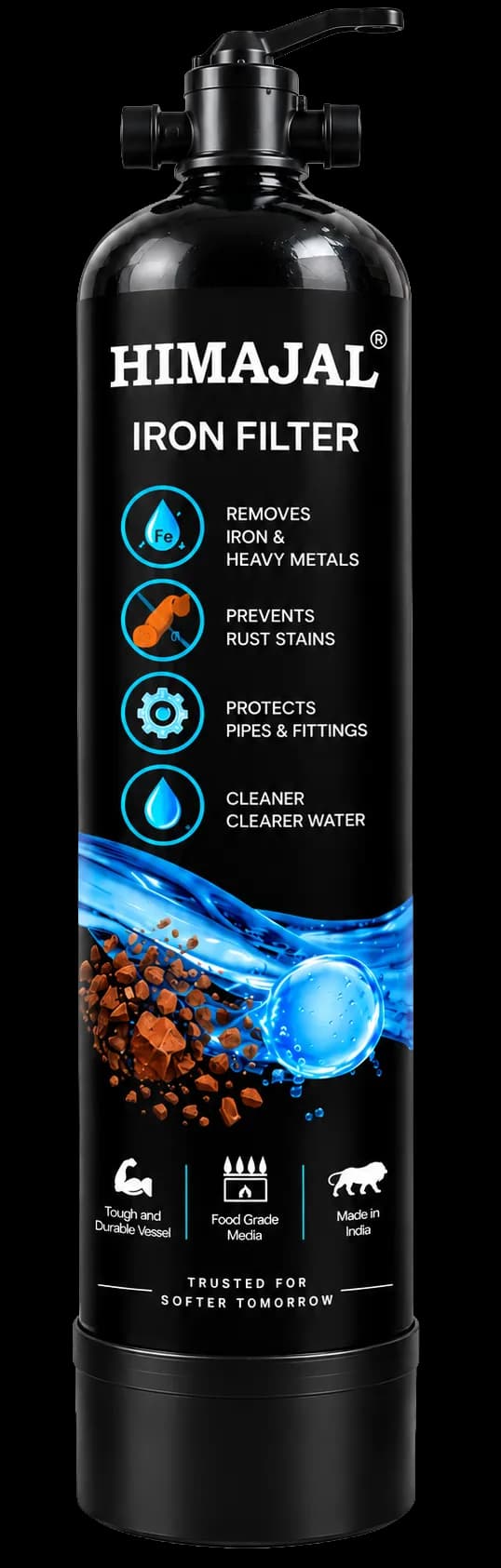
Iron is mainly an aesthetic and plumbing problem, but it fouls purifier cartridges and RO membranes quickly. Remove it upstream with an iron-removal filter before the drinking-water purifier.
What are the signs of hard water?
White, chalky scale on taps, shower heads, kettles and geyser elements; soap and shampoo that lather poorly; and spots on glassware. Hard water is caused by dissolved calcium and magnesium.[8]
See our detailed guide: Hard Water in India: What It Is, Effects and Solutions.
How can you identify water quality issues at home?
Look
Turbidity, colour on standing (iron), floating particles, slime in tanks.
Smell and taste
Rotten egg (hydrogen sulphide), chlorine, earthy or musty notes, salty or metallic taste.
Check fixtures
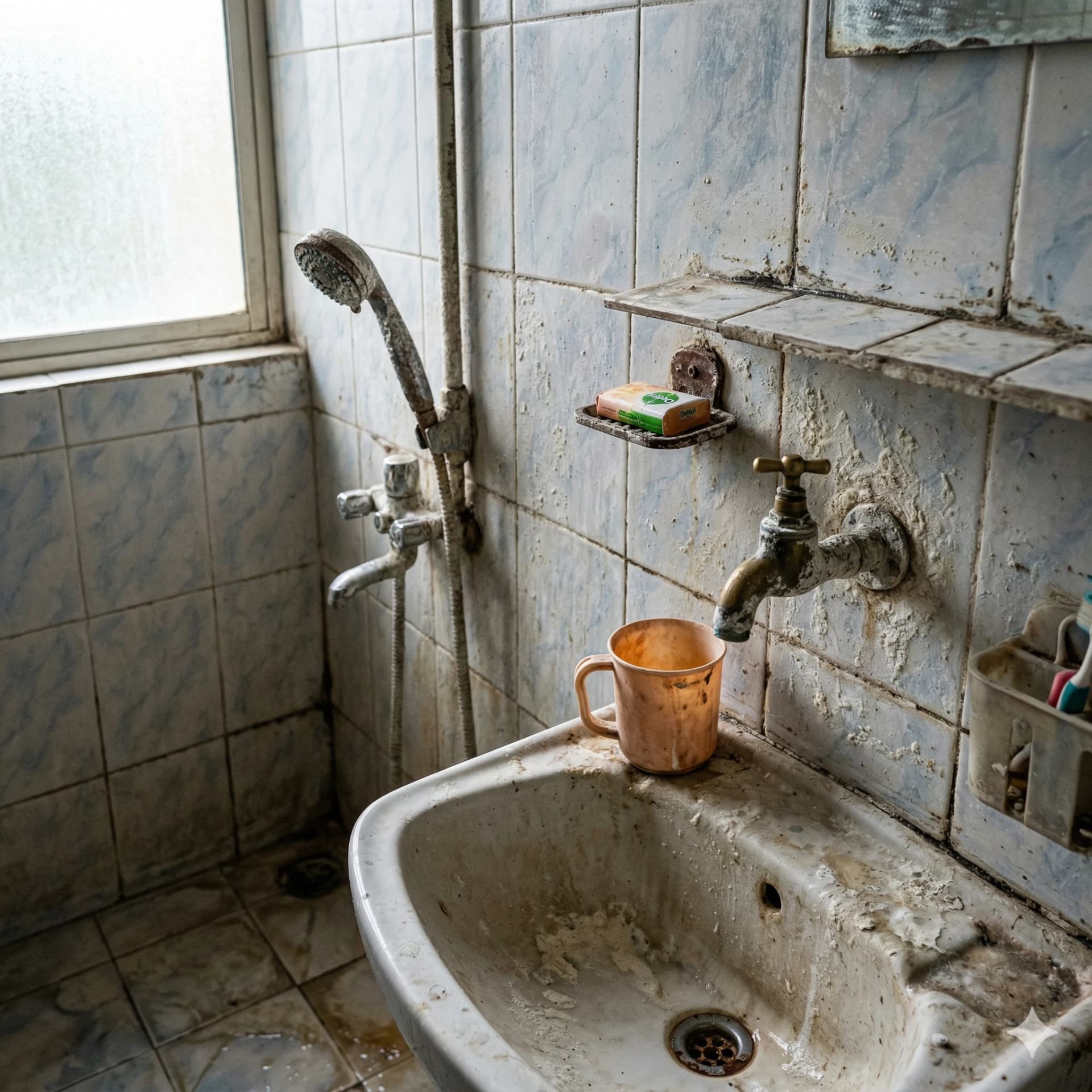
White scale (hardness), rust stains (iron), blue-green stains (corrosive, acidic water dissolving copper).
Measure TDS
A handheld meter gives a first indication of dissolved salts. It is not a safety test.
Check public data
CGWB and state groundwater or public health reports show known problems in your district.