
ScaleOut for
Poultry Farms
Healthier Birds. Cleaner Water. Better Profits.
Contaminated and hard water silently reduces your flock performance, increases mortality, and raises antibiotic dependency. ScaleOut eliminates these problems at the source.
70%
Broiler body is water
65%
Layer egg is water
0
Chemicals used
24/7
Continuous treatment
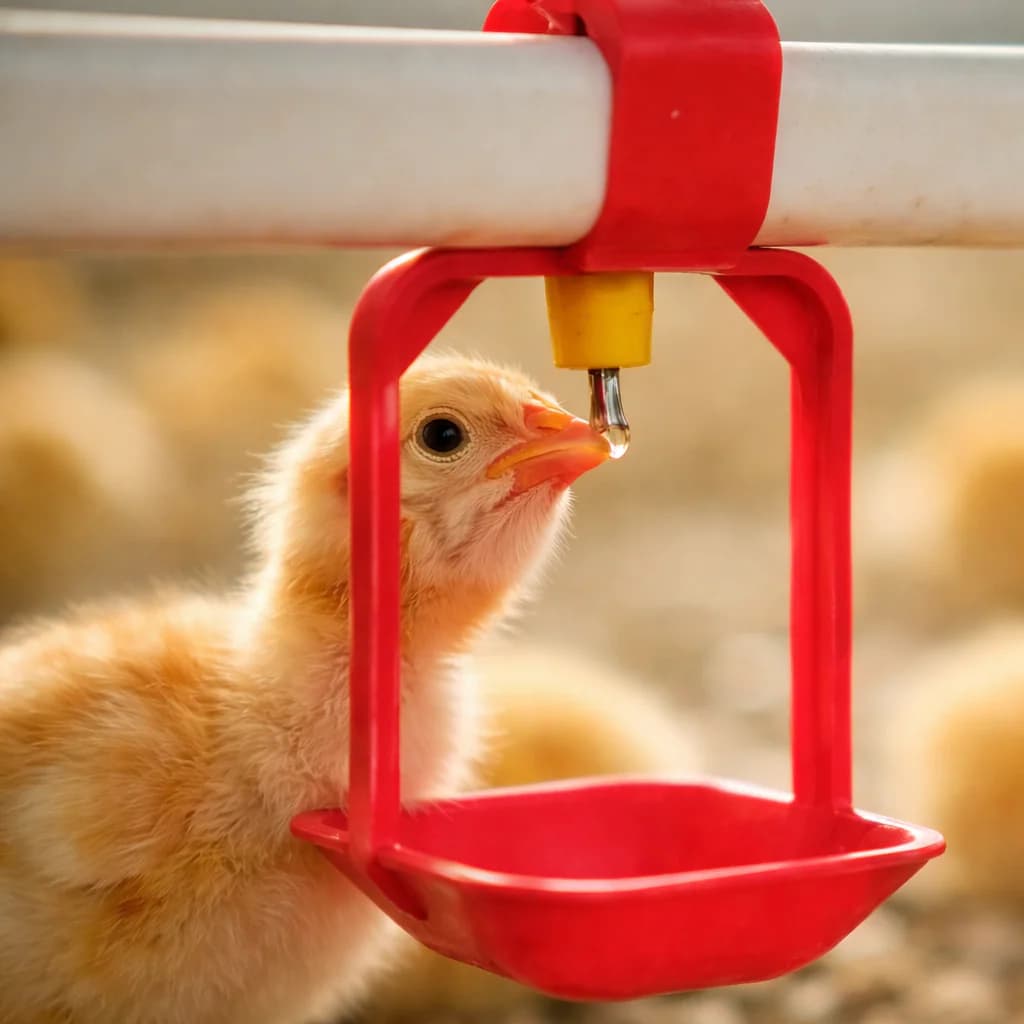
EPSR TECH
No chemicals
How Hard Water Harms Your Flock
Contaminated hard water is silently reducing your flock health, growth rate, and profitability.
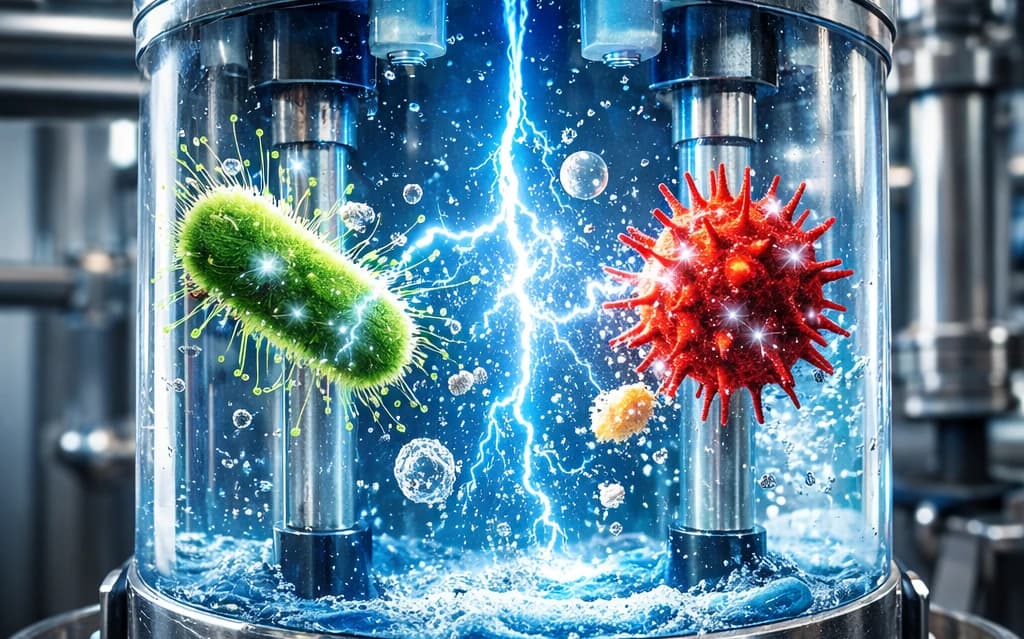
Bacterial Contamination
Water often carries E.coli, Salmonella and coliforms that spread disease through shared nipple drinker lines.
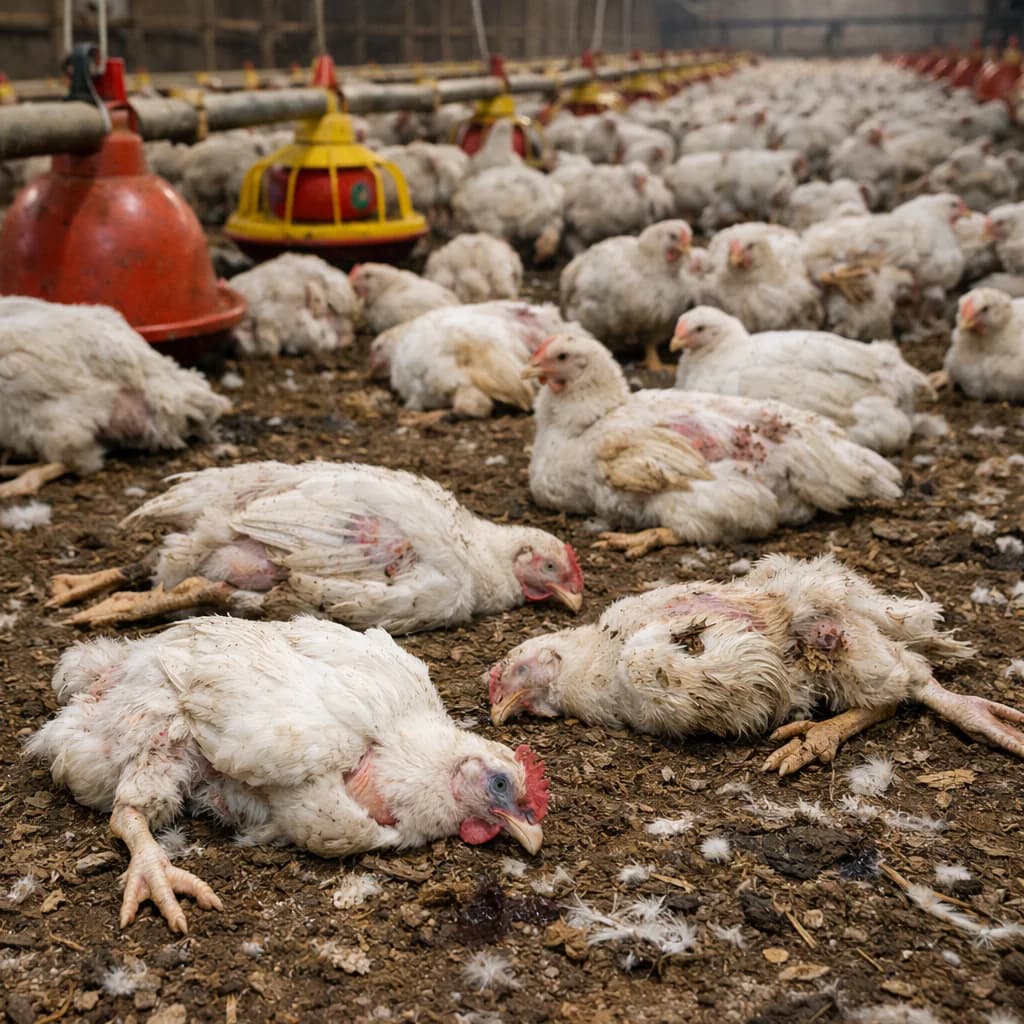
High Bird Mortality
Contaminated water is the #1 cause of unexplained flock mortality.
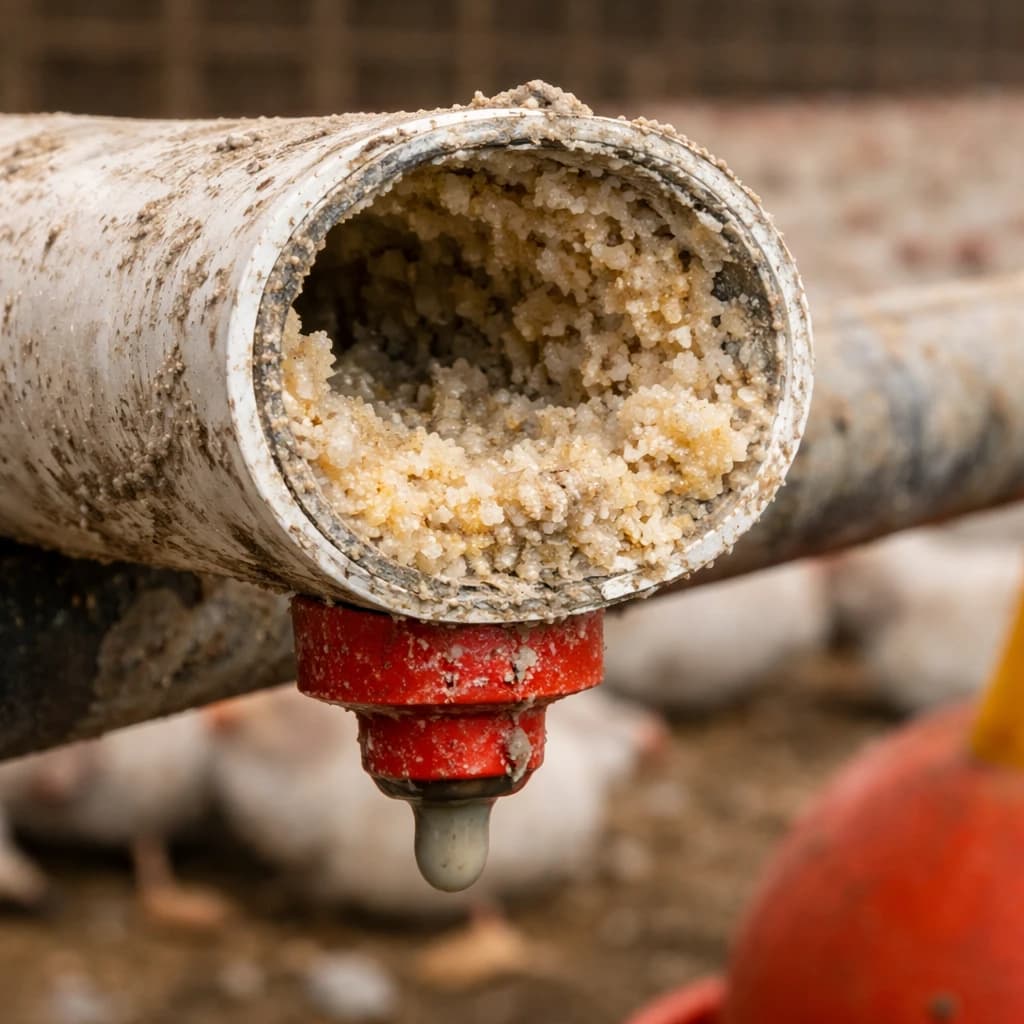
Scale Clogs Drinker Lines
Hard water deposits scale inside nipple drinkers — birds cannot drink properly, FCR worsens.
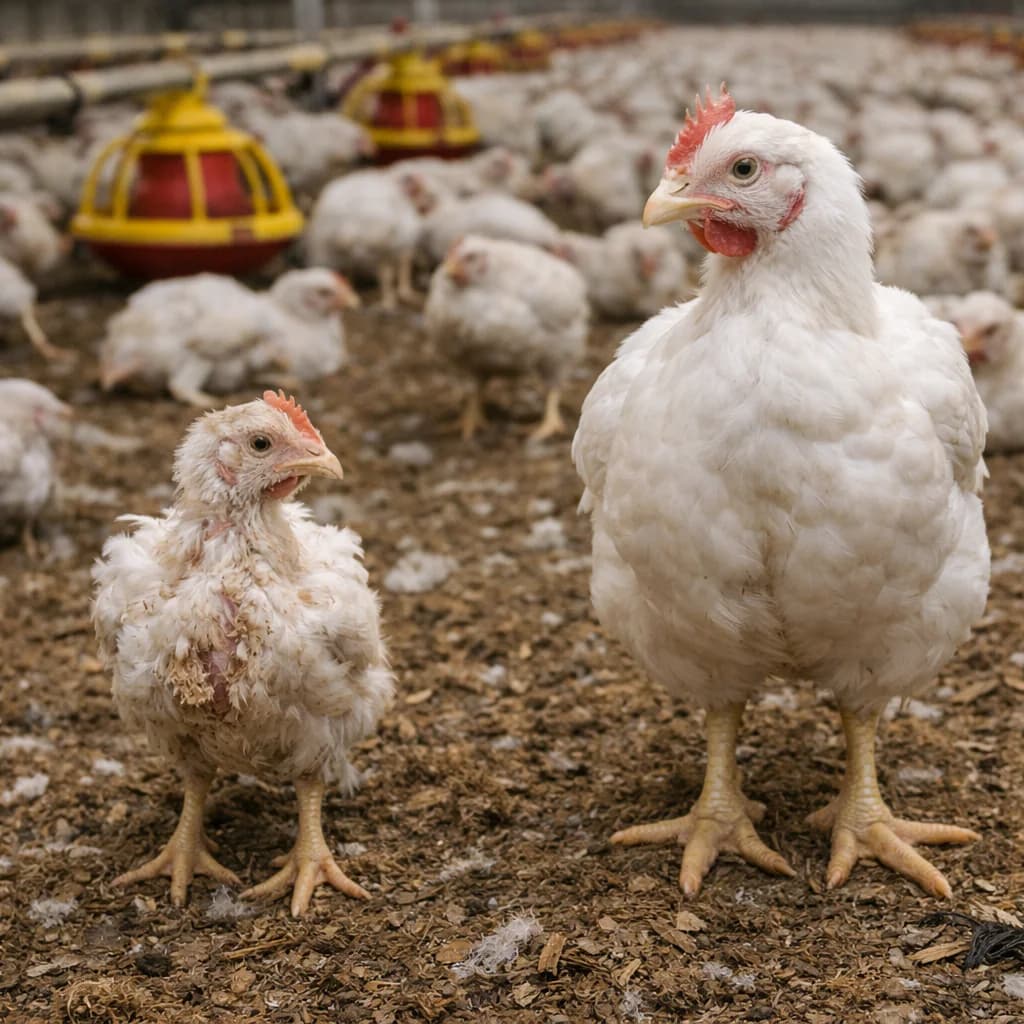
Poor Growth & FCR
High TDS water reduces water intake, nutrient absorption and weight gain — hurting profit per cycle.
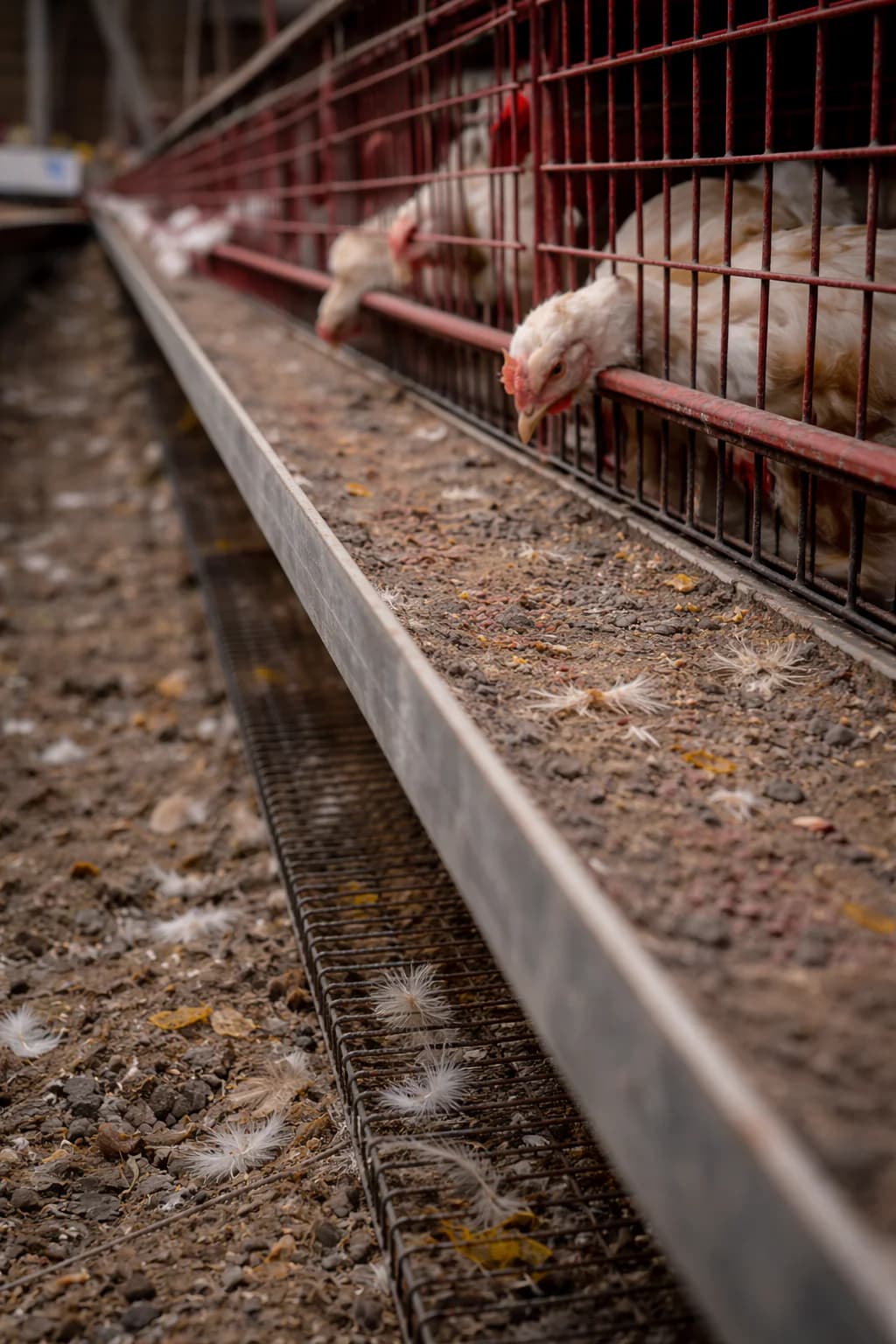
Reduced Egg Production
Layer birds are 65% water. Hard water directly reduces egg production rates and shell quality.
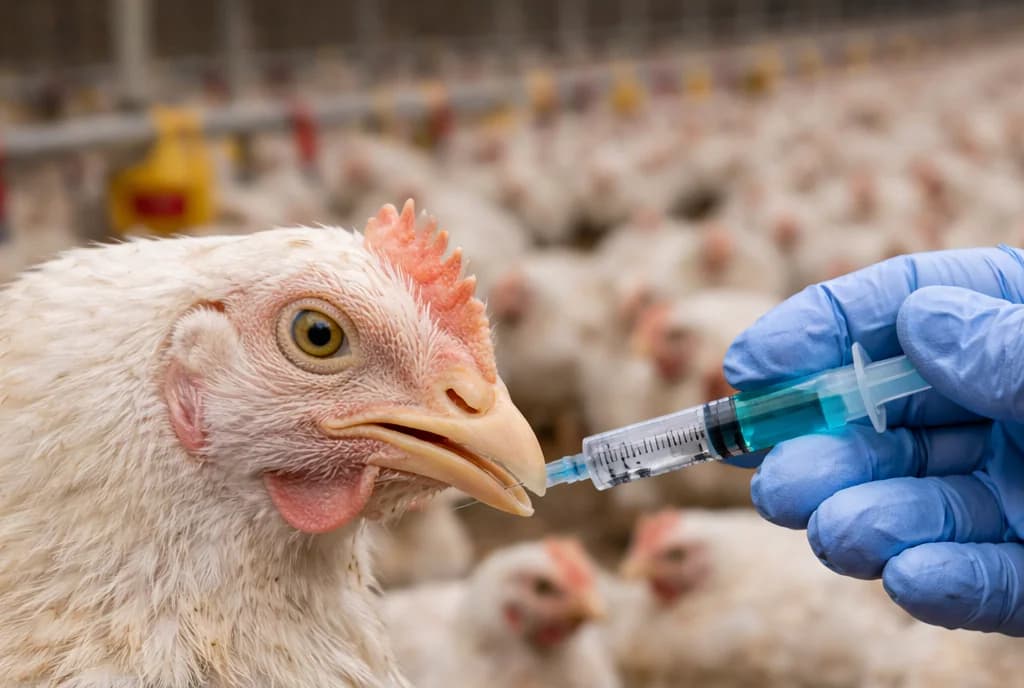
High Antibiotic Dependency
Without clean water, farms rely on antibiotics — raising costs, creating resistance.
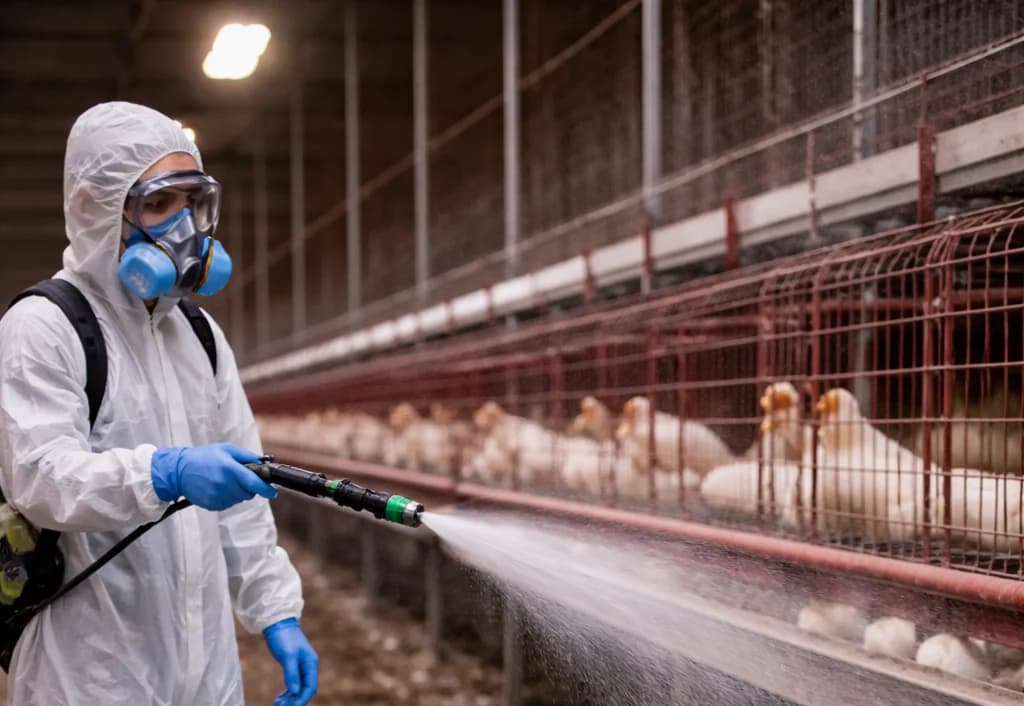
Constant Sanitiser Costs
Chemical sanitisers are expensive recurring costs that only mask the problem.
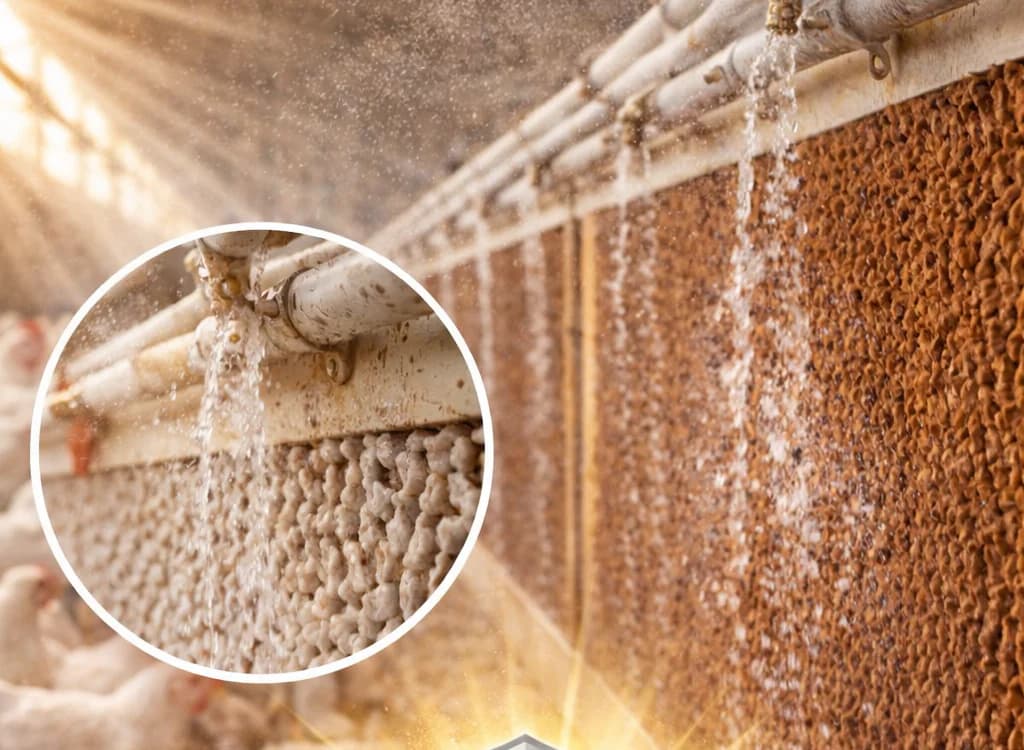
Cooling Pad Scaling
Hard water deposits minerals on cooling pads, reducing airflow and increasing heat stress.
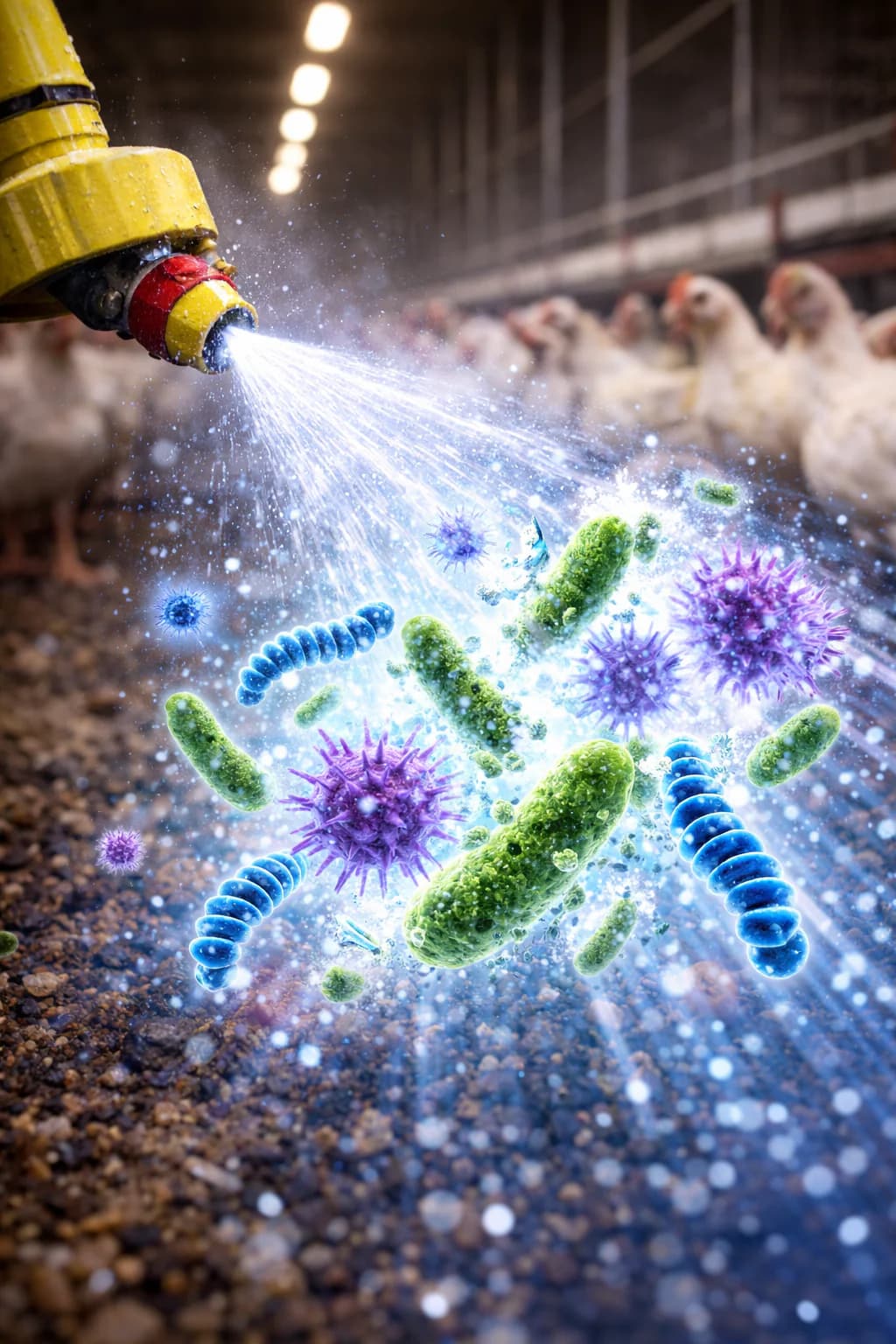
Protect Your Flock from E. coli Through Better Water Quality
Contaminated drinking water can become a major pathway for bacterial exposure in poultry farms.
Interactive 3D cutaway of the ScaleOut EPSR chamber: untreated water enters, passes between a titanium anode and stainless-steel cathode, and leaves as treated water for the poultry drinker lines.
Particle colours are illustrative: green capsules stand for microorganisms, white flecks for hardness minerals. The scene is not to scale.
How EPSR water treatment technology works
EPSR (Electro-Precipitation Scale Removal) treats water electrochemically, with no salt and no chemical sanitisers added.
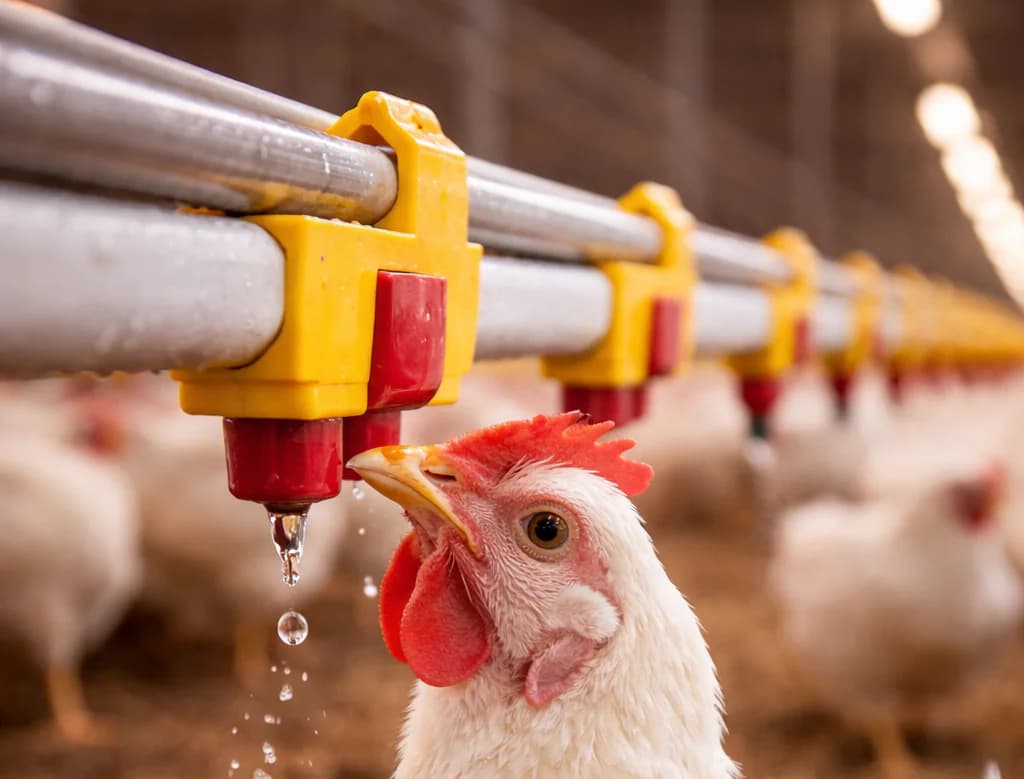
Why water is a contamination pathway
- E. coli and other waterborne microorganisms can contaminate poultry drinking water at the source, in storage tanks or inside the lines.
- Shared pipelines and drinker systems can carry contamination through the whole shed.
- Contaminated water can affect bird health, intestinal function, feed utilisation and overall flock performance.
- Conventional chemical sanitisation needs regular monitoring, dosing and maintenance to stay effective.
How ScaleOut helps
- Uses an electrochemical treatment process (EPSR) on the main water line.
- Designed to improve water hygiene and help control bacterial contamination.
- Treats water continuously, without adding salt or conventional chemical sanitisers.
- Helps maintain better water quality through the drinking-water distribution system.
- Supports a cleaner, simpler water management programme for poultry farms.
Effect 1: water hygiene
Electrochemical reactions at the anode are designed to help control microorganisms in the water. How well this works depends on water chemistry, flow rate and contact time. That is why we test your water first.
Effect 2: mineral scale management
Hardness minerals are encouraged to deposit on the cathode inside the chamber rather than in your lines, cooling pads and drinkers. The cooling pad and nipple drinker sections below explain this effect.
ScaleOut is not a sterilisation system and does not replace regular water testing, drinking-line flushing and sanitation, biosecurity or veterinary disease-control protocols. It works alongside them.
Keep Your Cooling Pads Cleaner. Maintain Better Airflow.
Hard water minerals accumulate inside honeycomb cooling pads, reducing cooling efficiency and increasing heat stress in poultry sheds.
Split-screen 3D comparison of two honeycomb cooling pads. Left, untreated hard water: white mineral deposits build up in the channels, some channels block, and water flow and airflow fall. Right, ScaleOut-treated water: far less deposition, with open channels and steady airflow.
Illustrative visualisation. Actual scaling rates depend on water hardness, TDS, pad type, climate, bleed-off and maintenance practice.
Why honeycomb cooling pads scale up
- 01
Water circulates
Pumped over the pad continuously
- 02
Water evaporates
Cooling the air drawn through
- 03
Minerals stay behind
Calcium and magnesium are left on the pad
- 04
Channels narrow
Less water distribution and airflow
The problem
- Water circulates continuously through honeycomb cooling pads.
- Hard water contains dissolved calcium and magnesium minerals.
- As water evaporates to cool the air, those minerals are left behind.
- Over time, mineral deposits build up on pad surfaces and inside the channels.
- Scaling can restrict water distribution and airflow through the pad.
- Lower cooling efficiency can increase heat stress, affecting bird comfort, feed intake and growth.
How ScaleOut helps
- ScaleOut uses EPSR technology to condition the water feeding the pads.
- Helps manage the mineral scaling tendency of the water.
- Helps reduce mineral deposit formation on cooling pad surfaces.
- Supports more consistent water distribution across the pads.
- Helps maintain airflow and cooling system efficiency.
- Can reduce how often pads need intensive cleaning and maintenance.
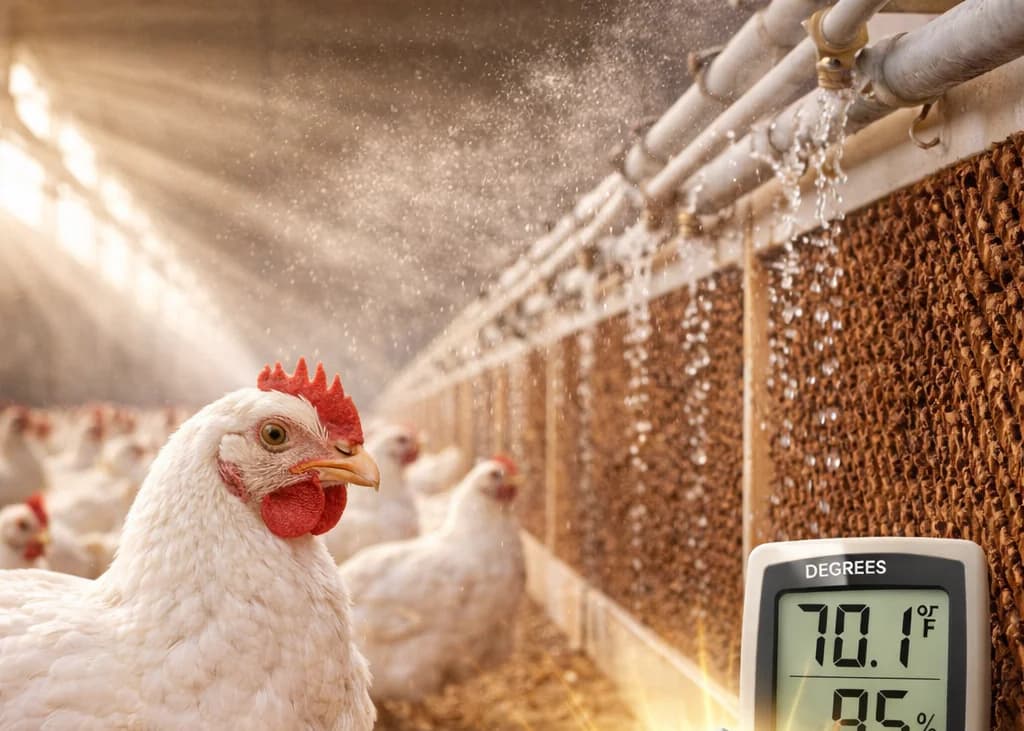
Keep following your pad supplier's guidance on bleed-off, water-quality checks and periodic cleaning. ScaleOut supports that routine; it does not replace it.
Uninterrupted Drinking Water for Every Bird
Scale accumulation and suspended deposits inside drinking water lines can affect nipple drinker performance.
3D cutaway of a poultry nipple drinker with a draggable before-and-after divider. The untreated side shows mineral scale lining the valve bore, ball and pin, with restricted water flow and slow drips. The ScaleOut-treated side shows clean internal passages and steady drips.
- 1Water line
- Pressurised pipe feeding every drinker
- 2Valve ball & seat
- Seals the line until a bird drinks
- 3Trigger pin
- The bird's peck lifts it and water runs down
- 4Internal bore
- A narrow passage, easily restricted by deposits
The problem
- Poultry farms run long water distribution pipelines down every shed.
- Nipple drinkers have very small internal water passages.
- Hard water can contribute to mineral scale building up in lines and valves.
- Deposits can affect nipple valve movement and water delivery.
- Blockages or restricted flow reduce the water available to birds.
- Uneven water access can affect flock uniformity and performance.
- Frequent flushing and cleaning add to maintenance work.
How ScaleOut helps
- Conditions water before it reaches the poultry drinking system.
- Helps reduce mineral scale accumulation inside pipelines and nipple valves.
- Supports smoother water flow through the drinking system.
- Helps reduce scaling-related maintenance and blockage issues.
- Supports consistent drinking water availability across the shed.
Continue scheduled drinker-line flushing, pressure checks and nipple inspection. Biofilm and suspended solids still need routine line hygiene, even when hard-water scaling is under control.
Better Water Management. Better Feed Conversion. Better Farm Economics.
Water plays a critical role in poultry nutrition, digestion, feed intake and overall growth performance.
How water quality connects to FCR
- 1Water is essential for digestion, nutrient absorption and metabolic functions.
- 2Birds need consistent access to clean drinking water throughout the cycle.
- 3Poor water quality, restricted availability and waterline scaling can change drinking behaviour.
- 4Inadequate water intake can reduce feed consumption and growth.
- 5Poor flock uniformity and lower weight gain push the feed conversion ratio up.
How ScaleOut contributes
- Supports better drinking water management on the farm.
- Helps maintain waterline performance by managing mineral scaling.
- Helps reduce scaling-related restrictions in nipple drinker systems.
- Supports consistent access to drinking water across the shed.
- Contributes to a better overall poultry water management programme.
The FCR formula
Example: 17,000 kg of feed producing 10,000 kg of live weight gain gives an FCR of 1.70. A lower FCR means less feed per kg of bird produced.
FCR & feed-cost calculator
Feed consumption
17,000 kg
this batch
Live weight gain
10,000 kg
this batch
FCR
1.70
target 1.65
Feed cost / kg live wt
₹64.60
at target ₹62.70
Feed saved per batch
500 kg
Feed-cost difference per batch
₹19,000
Per year (6 batches)
₹1,14,000
What a small FCR change is worth on your numbers
| Illustrative scenario | Feed saved / batch | ₹ / batch | ₹ / year |
|---|---|---|---|
| −0.02 (FCR 1.70 → 1.68) | 200 kg | ₹7,600 | ₹45,600 |
| −0.05 (FCR 1.70 → 1.65) | 500 kg | ₹19,000 | ₹1,14,000 |
| −0.10 (FCR 1.70 → 1.60) | 1,000 kg | ₹38,000 | ₹2,28,000 |
All improved FCR figures are illustrative scenarios calculated from the numbers you enter. They are not ScaleOut performance claims. FCR depends on genetics, feed formulation, brooding, ventilation, stocking density, health status and management, as well as water. The calculator covers feed cost only, not chicks, labour, medication or energy.
What ScaleOut Does for Poultry
EPSR conditions water at the source, supporting water hygiene, managing mineral scale and simplifying water management across the farm.

Supports Egg Production & Quality
Consistent access to good-quality drinking water supports steady laying performance and shell quality in layer flocks.
Supports Lower Antibiotic Dependency
Better water hygiene is one part of a disease-prevention programme that can help reduce reliance on antibiotics, under veterinary guidance.
Lower Chemical Sanitiser Spend
Continuous electrochemical treatment with no salt or chemical consumables can reduce recurring sanitiser purchases.
Supports Flock Health
Cleaner, consistently available drinking water supports flock health alongside good biosecurity and farm management.
Explore the technology in depth
ScaleOut for Poultry — In Your Language
Watch how ScaleOut works on real poultry farms — explained in multiple languages.
ScaleOut poultry demo — real farm results in Telugu
ScaleOut for poultry farms — full explanation in Hindi
ScaleOut for poultry farms — explained in English
ScaleOut for poultry farms — explained in Kannada
What Farmers Are Saying
Hear directly from poultry farmers who have seen the difference ScaleOut makes.
Real farmer shares his experience with ScaleOut on his poultry farm.
"Poultry farm water was full of bacteria. ScaleOut solved it completely — birds are healthier. No sanitiser needed."
Poultry Farmer
📍 Hyderabad, Telangana · ScaleOut Poultry
"FCR improved noticeably after installing ScaleOut. Mortality came down significantly. Best decision for my farm."
Ravi Kumar
📍 Kurnool, AP · ScaleOut Poultry
"No more nipple drinker blockages. Birds are drinking properly. Egg production up from the second batch itself."
Suresh Naidu
📍 Vijayawada, AP · ScaleOut Poultry
What's Included in Your Free Farm Demo
Free water quality test
We test your water for TDS, bacteria and hardness on-site at your farm.
Right-size recommendation
Capacity matched to your bird count and daily water consumption.
Farm installation support
Professional installation with zero disruption to your production cycle.
Post-install support
Dedicated poultry support team available across all 11 states.
500+
Poultry Installations
11+
States Covered
24hr
Specialist Callback
0
Chemicals in Treatment
Get Your Free
Farm Water Quote
Fill in the form and our poultry water specialist will contact you within 24 hours with a customised quote and free on-site water test.
Bacteria & E.coli eliminated at source
No chemicals — pure electrolysis keeps drinker lines pathogen-free.
Measurable FCR improvement
Farms report better daily weight gain from the very first batch.
Zero consumables, zero running cost
No chlorine tablets, no salts — just electricity already used by your farm.
No residues in birds or eggs
100% chemical-free treatment — safe for every flock type.
Response within 24 hours
Our poultry water specialist will call you to discuss your farm.
Clean Water.
Healthier Birds.
Better Profits.
Water is the most important nutrient in poultry production. Bacteria and hard water are destroying your performance. ScaleOut fixes it — without chemicals.
Our poultry specialist will call within 24 hours for a free farm water assessment.
500+
Poultry farms installed
11+
States covered
35%
Avg mortality reduction
90%
Farms report FCR gains
0
Chemicals in treatment
5 Yr
Product lifespan
Poultry Farm Water Quality: Common Questions
Straight answers about E. coli control, cooling pads, nipple drinkers and FCR.
Does HIMAJAL ScaleOut eliminate E. coli from poultry drinking water?
ScaleOut uses an electrochemical (EPSR) treatment process designed to improve water hygiene and help control bacterial contamination in poultry drinking water. It is not a sterilisation system, and results depend on your water chemistry, flow rate and system condition. We recommend a water test before installation and regular microbiological testing afterwards.
Does ScaleOut add salt or chemicals to the water?
No. ScaleOut treats water electrochemically using a titanium anode and stainless-steel cathode powered by a low-voltage DC controller. It does not add salt or conventional chemical sanitisers to the water.
Do I still need to flush and sanitise my drinker lines?
Yes. ScaleOut supports a cleaner water management programme but does not replace drinking-line flushing, line sanitation between flocks, biosecurity, regular water testing or veterinary disease-control protocols.
How does ScaleOut help with honeycomb cooling pad scaling?
Cooling pads scale because evaporation leaves calcium and magnesium minerals behind. ScaleOut conditions the water with EPSR technology to help manage its scaling tendency and reduce mineral deposits on pad surfaces. That supports more even water distribution and airflow, and can cut how often pads need intensive cleaning.
Can ScaleOut stop nipple drinker blockages?
ScaleOut conditions water before it reaches the drinking system and helps reduce mineral scale accumulation inside pipelines and nipple valves, which supports smoother flow and fewer scaling-related blockages. Routine line flushing and nipple inspection are still recommended.
Will ScaleOut improve my flock's FCR?
Water quality and consistent water access are among many factors that affect feed conversion ratio, along with genetics, feed, ventilation, health and management. ScaleOut supports better water management, but we do not promise a specific FCR improvement. Use the FCR calculator on this page to see what a change would be worth on your own numbers.