
Water Solutions
Water Conditioners
Explore Himajal Water Conditioners — expert guidance, professional installation and dependable after-sales service across India.
- Products
- 16
- Ranges
- 2
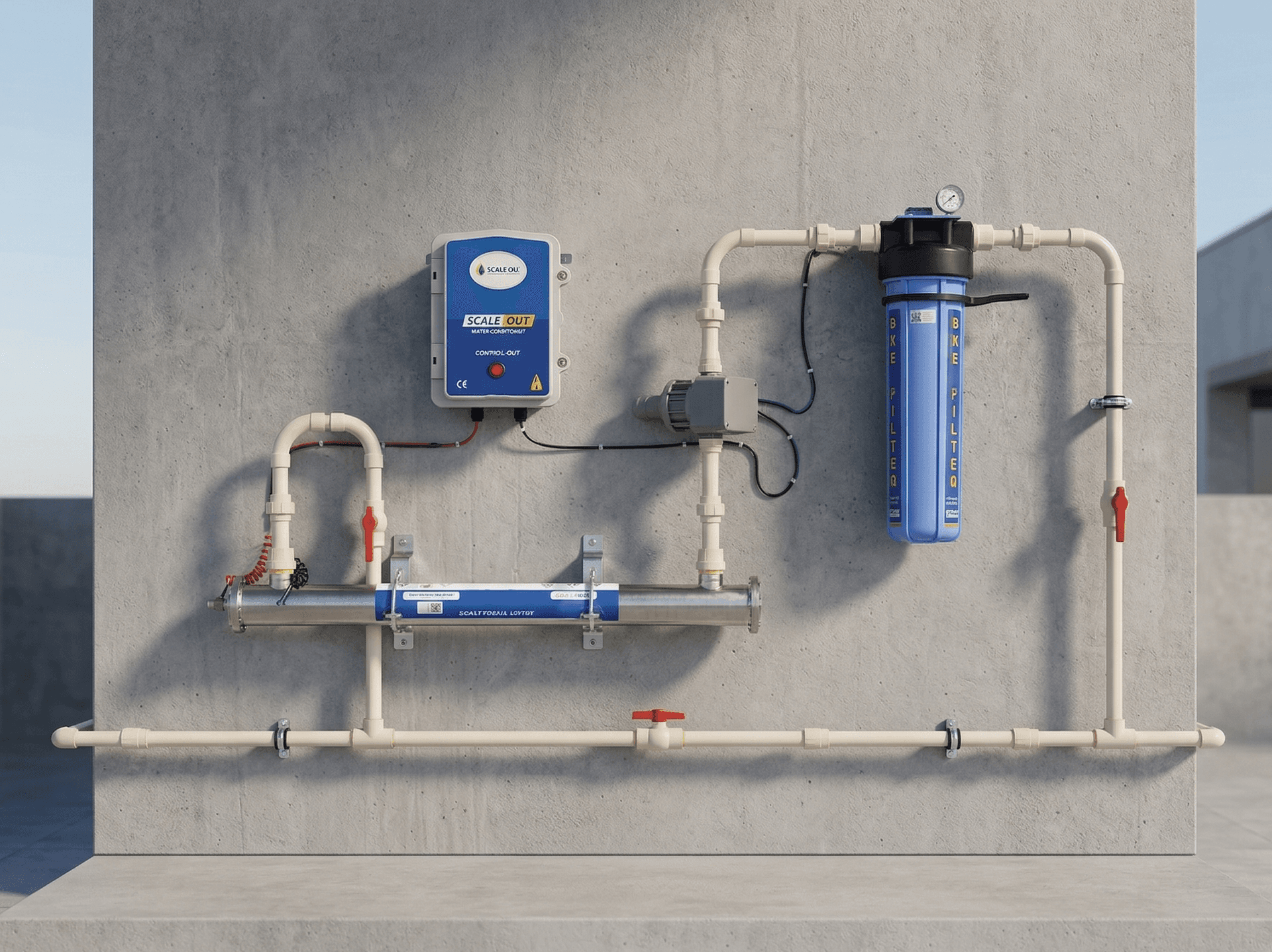
Salt-free scale control
What is a water conditioner, and how is it different?
Hard water carries dissolved calcium and magnesium that settle as white scale wherever water flows or heats up. That scale chokes pipes, burns out geyser elements and leaves stains on taps and tiles.
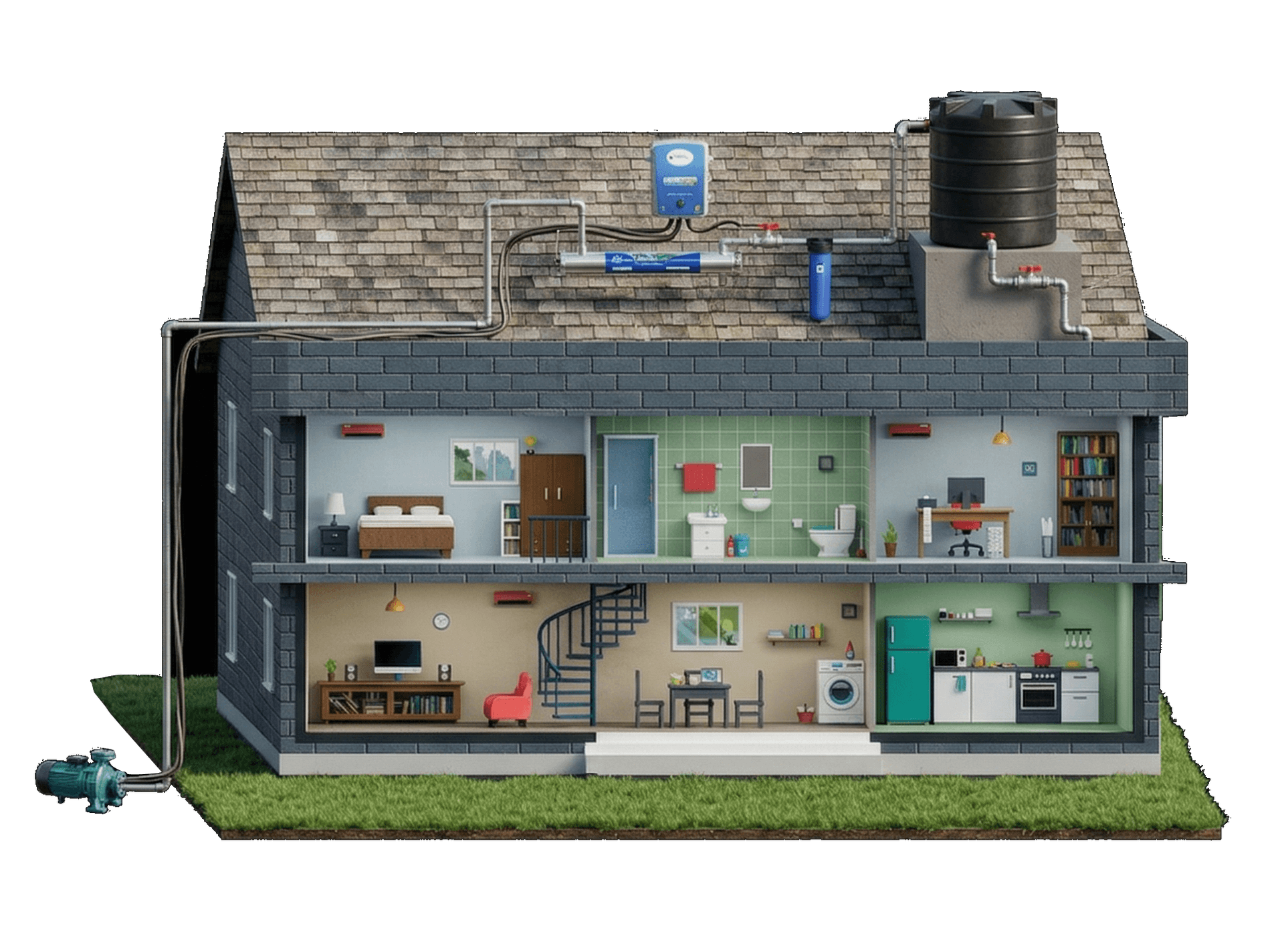
A water conditioner tackles this scale without salt or chemicals. It's fitted on the main line, so the whole building is protected.
Himajal offers two types. Electronic conditioners (ScaleOut) use low-voltage electrolysis to collect hardness inside the unit instead of in your pipes. Magnetic conditioners use permanent magnets on the water line and need no power at all.
- No salt, no chemicals
- Zero water wastage
- Little or no electricity
- No resin to replace
EPSR electrolysis technology
How ScaleOut works
A stainless-steel chamber with a titanium anode and stainless-steel cathode sits on your main water line, powered by a low-voltage DC control unit. Everything happens automatically as water flows through.
- 01
Hard water enters
Untreated bore or municipal water flows into the stainless-steel chamber. No pre-treatment is needed.
- 02
Electrolysis extracts scale
A low DC current makes calcium and magnesium precipitate onto the cathode inside the chamber, not inside your pipes.
- 03
Conditioned water out
Scale-free water reaches every tap, geyser and appliance in the building, with no chemicals added.
- 04
Simple periodic flush
The collected limescale is flushed out of the chamber during routine maintenance. The titanium anode lasts for years.
Benefits
Scale protection for the whole building
Protects pipes & fixtures
Stops new scale forming in pipelines, taps, shower heads and fittings, so water pressure stays steady.
Longer appliance life
Geysers, washing machines and RO purifiers stay free of the scale that burns out heating elements.
Better lather, cleaner surfaces
Soap and detergent work better, and tiles and glass are left with fewer white spots.
Eco-friendly
No brine discharge to drain, no salt bags and no rejected water. Every litre you pump is usable.
Low running cost
Runs on a small amount of electricity, with no salt or consumables to buy every month.
Easy upkeep
No resin, no regeneration cycles and no settings to adjust. Just an occasional chamber flush.
Where water conditioners are used



Compare
Water softener vs water conditioner
Both deal with hard water, but in different ways. A softener removes hardness using salt. A conditioner stops that hardness from turning into scale in your plumbing, without salt.
How it works
Softener
Ion exchange: resin swaps calcium and magnesium for sodium
Conditioner
Electrolysis: low DC current draws hardness out as scale inside the chamber
Salt / chemicals
Softener
Needs regular salt top-ups for regeneration
Conditioner
No salt and no chemicals
Water wastage
Softener
Uses water for backwash and brine rinse every regeneration
Conditioner
None. All inlet water reaches your taps
Drain needed
Softener
Yes, for backwash and brine discharge
Conditioner
No drain line for regeneration
Sodium added
Softener
Adds some sodium to the water
Conditioner
Adds no sodium
Upkeep
Softener
Monthly salt refill, annual service, resin replacement over time
Conditioner
Periodic chamber flush; no consumables
Power
Softener
Control valve only
Conditioner
Low-voltage DC unit, running continuously
Soft-water feel
Softener
Gives the classic slippery “soft water” feel
Conditioner
Water feels like normal water; the benefit is scale protection
Best for
Softener
Very hard water where measured zero-hardness water is needed (boilers, laundries, some industry)
Conditioner
Homes, buildings and farms that want scale protection without salt, waste or brine
Choose a water softener if…
- You need water with near-zero measured hardness
- It's for a boiler, laundry or process that specifies soft water
- You prefer the slippery soft-water feel when bathing
- You're fine with monthly salt top-ups and a drain line
Choose a water conditioner if…
- Your main problem is scale on pipes, taps, geysers and tiles
- You don't want salt, chemicals or brine going down the drain
- Water is scarce and you can't afford to waste any
- You want something you can install and largely forget
Neither a softener nor a conditioner makes water safe to drink. For drinking water, use an RO or UV purifier at the kitchen tap.
Browse the range